
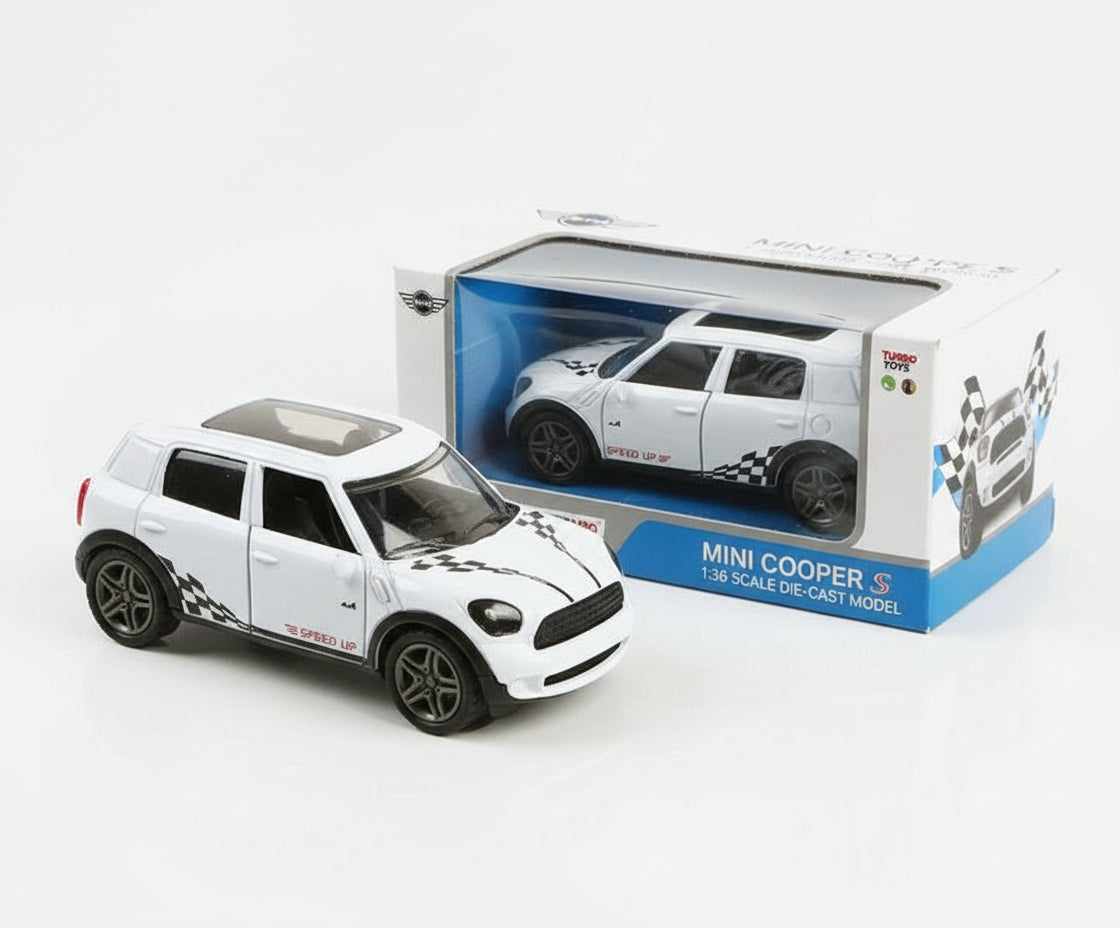
Depending on the model, features can include:
-
Realistic design and detailing — often mimicking real-world cars, with accurate shapes, paintwork, decals, grills, lights, interiors, etc.
-
Functional parts — many die-cast cars have openable doors, hoods or trunks, working wheels for rolling, and sometimes even movable steering wheels or suspension (in larger/more advanced models). Safe build for kids — for kid-oriented models, paint and materials are often non-toxic, and the design avoids small or easily detachable parts (to reduce choking hazard) — but it's still typically recommended for ages 3+ due to small parts or weight.
-
Durability — because of the metal body, die-cast cars handle rough play or being dropped much better than plain plastic cars.
-
Collectible potential — besides play, some die-cast cars (especially scale-replica ones) are detailed enough to display on shelves, appealing to older kids or even adult collectors.
👶 Who Die-Cast Model Cars Are For
-
Young kids (about ages 3 and up): simpler, rugged models for safe play — rolling, crashing, racing, etc.
-
Older kids & preteens: for more realistic “play + display,” interactive features, vehicle-type learning.
-
Collectors / hobbyists: detailed, scale-accurate replicas for display, photography, or building a model-car collection.